The Smartphone, a Claude Glass in Every Pocket
The tinted mirror of eighteenth-century tourists never quite disappeared. It learned to take pictures.
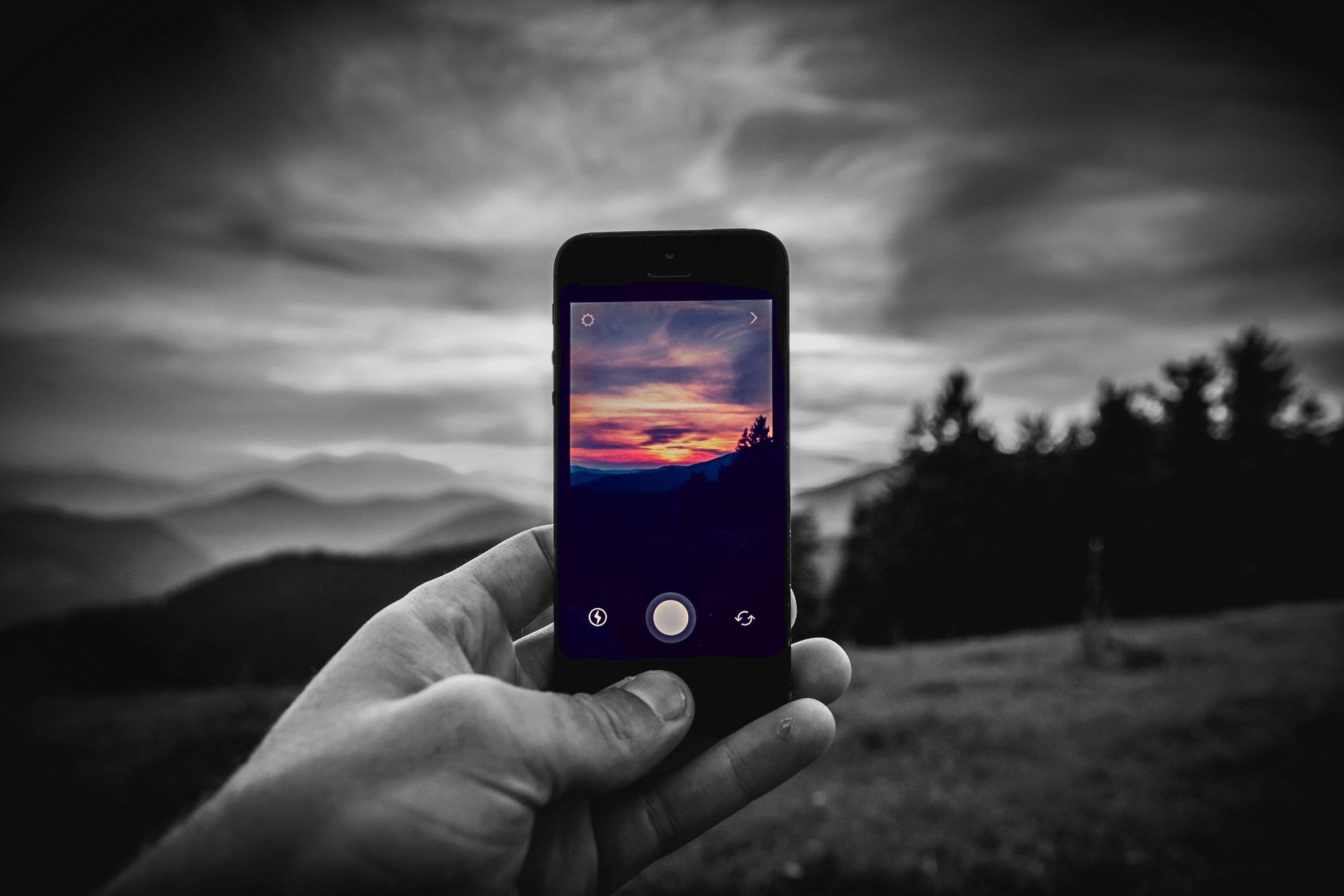
History draws no straight line from the Claude glass to the camera. The first direct comparison came only in 1839, when Sir John Robinson said that daguerreotypes looked almost like views in a black mirror, and Jonathan Crary argues that the birth of photography had nothing to do with earlier optical devices.1 To me that is a question of technology. What matters more is what the users of the glass were after.
They wanted the light to be right. Tinted Claude spectacles turned the middle of the afternoon into moonlight with blue or grey lenses, and any scene into a reddish sunrise with yellow ones. With a little imagination we can see the same wish in the smartphone, whose preloaded filters can instantly tint a photograph of anything and furnish it with every conceivable effect.2 Nature photographers chase the golden or magic hour around sunrise and sunset; Sean Arbabi notes that the camera records colours in that light which are hard to see with the naked eye.3
Beautiful everywhere
Arbabi tells of a hiker who met him in the wilderness, laden with lenses, and grinned: photographers make everything look so beautiful, when in reality it never is. Arbabi replied that he shows places at their best, because that is what his clients want, and what he wants too.4 Both are right.
And the images do not stay with their makers. Pictures of nature now flood the networks, and it hardly matters where they come from or how many filters they have passed through. Many of them follow the standards of desktop wallpaper.5
The result is a strange comfort. If you saw it and sent it to me, and I looked at it too, then in a way we have both been there. In truth none of us was. A great many pixels on many screens simply coloured themselves in the same combination. The Claude glass, at least, made you stand in the landscape.
Read the full section in the dissertation