The Claude Glass: Admiring Nature with One’s Back to It
Eighteenth-century lovers of landscape carried a small dark mirror and turned away from the view in order to enjoy it.
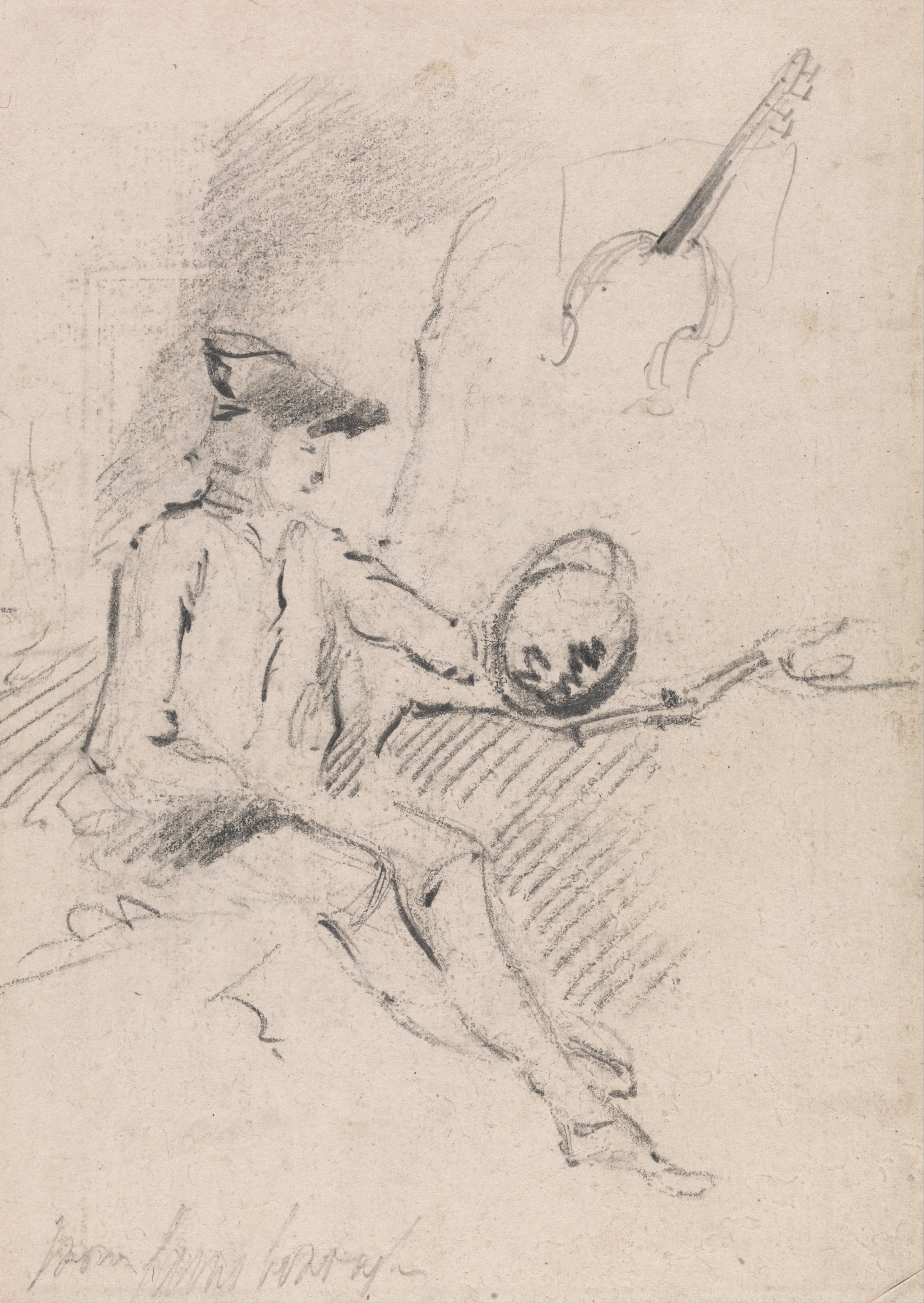
Why must nature, whenever we admire it, be reflecting something? The question opens the section of my dissertation devoted to a small, now almost forgotten object.
The Claude glass was a pocket mirror with a darkened surface, known in the history of Western art also as the black mirror. It takes its name from the French landscape painter Claude Lorrain (Claude Gellée, c. 1600–1682), whose idealised landscapes travellers hoped to see reproduced in its tinted reflection. In search of picturesque scenery they carried it in a frame, turned their backs on the landscape and looked at it in the mirror, to see how it would look in a picture.1
Hunters of views
Alongside hunters of game there appeared hunters of images, who stalked fine prospects as others stalked prey.2 William Gilpin made the comparison himself: “And shall we suppose it a greater pleasure to the sportsman to pursue a trivial animal, than it is to the man of taste to pursue the beauties of nature?”✓3 The view became a portrait of a scene, a trophy for those who had not seen it. Arnaud Maillet notes the reversal this brought: the landscape had once conditioned the painting, and now the painting began to condition the landscape.4
The dark glass held back raw daylight, smoothed away irregular detail and left an ideal of beauty. It did not copy nature into a picture; it laid a picture over nature. It was also cheap. A walker with neither a painter’s eye nor much money could still have the view a painter would have made.5
From mirror to screen
By the middle of the nineteenth century the mirror had fallen out of use, but the habit stayed. Photography took its place, and today’s hunters of images carry cameras that show their trophies at once on a small screen. In the dissertation I argue that the aesthetics of nature has very often been an aesthetics of depictions of nature. The mirror has gone. We still turn our backs on the view in order to see it.
Read the full section in the dissertation
Notes
- Carlson, 2009, p. 27, as discussed in the dissertation’s introduction (chapter 1, note 9). ↩︎
- Maillet, 2009, p. 167. ↩︎
- Gilpin, 1792, p. 48 (“On Picturesque Travel”, in Three Essays); wording checked against the original, see Sources & translation notes. ↩︎
- Paraphrased from Maillet, 2009, pp. 138–139. ↩︎
- Paraphrased from Maillet, 2009, p. 141. ↩︎